Service guide
Open Car Transport
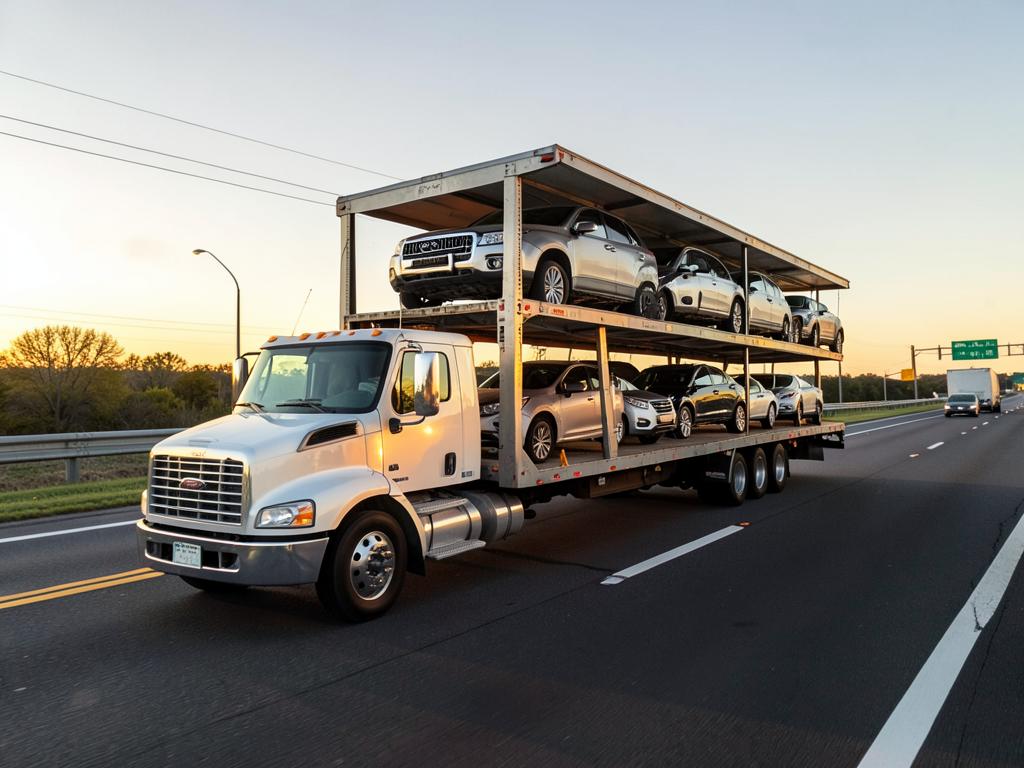
An open carrier is the two-level steel trailer you've seen delivering cars to dealerships. It holds seven to ten vehicles, and because that cost is spread across a full deck, it's the least expensive way to move a car long distance.
This is how the overwhelming majority of vehicles in the United States travel — including brand-new cars going from the factory to the showroom floor. If your vehicle is a daily driver, open transport is almost always the right answer.
Best suited for
- Daily drivers and family vehicles
- Relocations and job moves
- Online purchases and dealer transfers
- Snowbird and seasonal moves
- Anyone comparing value against protection
What your vehicle is actually exposed to
The honest answer: the same things it's exposed to when you drive it. Rain, sun, road dust and the occasional stone are part of highway travel whether your car is under its own power or on a deck.
What it is not exposed to is mileage, wear on the drivetrain, or a thousand miles of your own driving time. Vehicles are strapped or chained at the wheels and inspected before loading and at delivery.
Top load, bottom load, and why it matters a little
Upper-deck positions sit above the other vehicles and catch slightly less road spray. If your car is low-clearance or you simply prefer it, ask us to request a top-load position when we dispatch — availability varies by truck, and we'll tell you honestly whether we can secure it.
For most vehicles the difference is cosmetic and washes off. For a show car, that's exactly the point where enclosed transport becomes the better call.
How we price open transport
Distance sets the base. Under 500 miles you'll see the highest per-mile rate, because a driver's day costs the same whether the run is 300 miles or 900. Past 1,500 miles the per-mile rate drops sharply.
Vehicle size and running condition adjust it from there, along with how flexible your pickup window is. The number we quote is all-in: carrier pay, fuel and insured transport, with nothing added at delivery.
Before your driver arrives
- Leave about a quarter tank of fuel — carriers manage total weight.
- Remove toll transponders, parking passes and loose interior items.
- Wash the vehicle so existing chips and scratches are documented clearly.
- Note any leaks, alarms or aftermarket modifications for the driver.
- Have a set of keys ready for the driver at pickup.
Common questions
- Is open transport safe for my car?
- Yes. It's how new vehicles are delivered to dealerships nationwide. Every carrier we dispatch is licensed, insured and carries a minimum of $2,000,000 in cargo insurance.
- How much cheaper is open than enclosed?
- Open transport typically costs 30–50% less than enclosed on the same route. The gap widens on shorter lanes, where enclosed capacity is scarcer.
- Can I put belongings in the car?
- A modest amount in the trunk is usually fine — plan on roughly 100 lbs and keep it out of the passenger area. Personal items aren't covered by cargo insurance.
Related services
Enclosed auto transport
Fully covered trailers for classic, luxury, exotic and high-value vehicles. Maximum protection from weather and road debris.
Non-running vehicles
Winch-equipped carriers for inoperable, project and salvage vehicles. Tell us the condition up front and we dispatch the right truck.
Dealer & business fleets
Multi-car moves, auction pickups and corporate relocations with one dedicated point of contact for the whole load.
Get a real number for your vehicle
All-in pricing with nothing added at delivery. $0 due today — $299 when your driver is dispatched and the balance COD.
$0 due today. Just $299 when your driver is dispatched and the balance COD.