Service guide
Inoperable & Non-Running Vehicle Transport
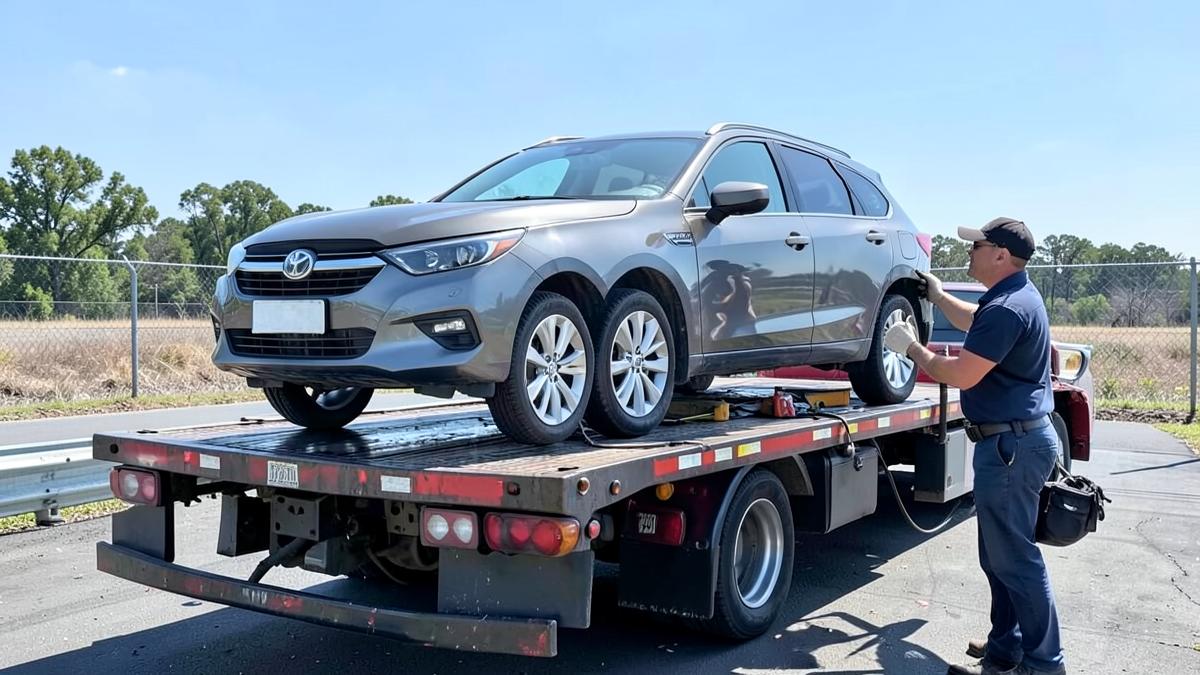
A vehicle that won't start needs a winch and a driver with the equipment and patience to use it. Not every carrier has one, which is why a non-running unit takes different routing than a running car on the same lane.
We move project cars, mechanical failures, salvage and insurance units, barn finds and estate vehicles. The only thing we ask is an accurate description — that's what determines whether the truck we send can actually load it.
Best suited for
- Project and restoration cars
- Mechanical breakdowns and blown engines
- Salvage, auction and insurance units
- Estate and barn-find vehicles
- Parts cars and shells
The three questions that decide the price
Does it roll, does it brake, does it steer? A vehicle that rolls freely and steers can be winched onto a standard trailer for a modest surcharge — usually $150 to $200 over the running rate.
If it doesn't roll, doesn't steer, or has seized brakes, it needs specialized equipment such as a forklift, skates or a rollback truck. That's a different quote, and we'd rather give you the accurate one now than have a driver refuse the load in your driveway.
Why accuracy up front saves you money
When a truck arrives and can't load, everybody loses: you lose your window, the carrier loses a slot, and the vehicle has to be requoted. It's the most common avoidable problem in this industry.
Tell us about flat tires, missing wheels, no keys, a locked steering column or a body that's been partially disassembled. None of it is disqualifying. All of it changes which truck we send.
Access and loading space
Winching needs room — a reasonably level surface and a straight pull of 30 feet or so. A car in a soft yard, behind a fence, or wedged in a tight garage may need to be moved to the street before pickup.
If you're not sure the location works, describe it to your specialist. We'd rather plan around it than discover it on the day.
What to tell us about the vehicle
- Whether it rolls, brakes and steers.
- Tire condition — flats and missing wheels matter.
- Whether keys are available.
- Any missing body panels, glass or drivetrain components.
- How much clear, level space surrounds it for winching.
Common questions
- How much more does it cost to ship a non-running car?
- Typically $150–$200 more than a running vehicle if it rolls, brakes and steers. Vehicles needing a forklift or rollback are quoted individually.
- Can you ship a car with no keys?
- Often yes, if it rolls and steers so it can be winched and secured. Tell us in advance so we send suitable equipment.
- Do you handle salvage and insurance vehicles?
- Yes — salvage yards, auction lots and insurance units are regular work for us nationwide.
Related services
Open car transport
The industry standard. Around 95% of vehicles ship this way, and it's the most affordable door-to-door option.
Dealer & business fleets
Multi-car moves, auction pickups and corporate relocations with one dedicated point of contact for the whole load.
Classic & collector cars
Enclosed trailers, lift-gate loading and drivers who move irreplaceable cars for a living.
Get a real number for your vehicle
All-in pricing with nothing added at delivery. $0 due today — $299 when your driver is dispatched and the balance COD.
$0 due today. Just $299 when your driver is dispatched and the balance COD.